


What happens after a child-friendly school library is established? At the very least, the school has a new library. If the school already had a library, managing a child-friendly library will certainly be different from the previous one. A child-friendly library isn’t just about building a physical library: it’s remodeled, adding more books and displaying them attractively on bookshelves, and equipping a child-friendly library with carpets to make reading more comfortable for children.
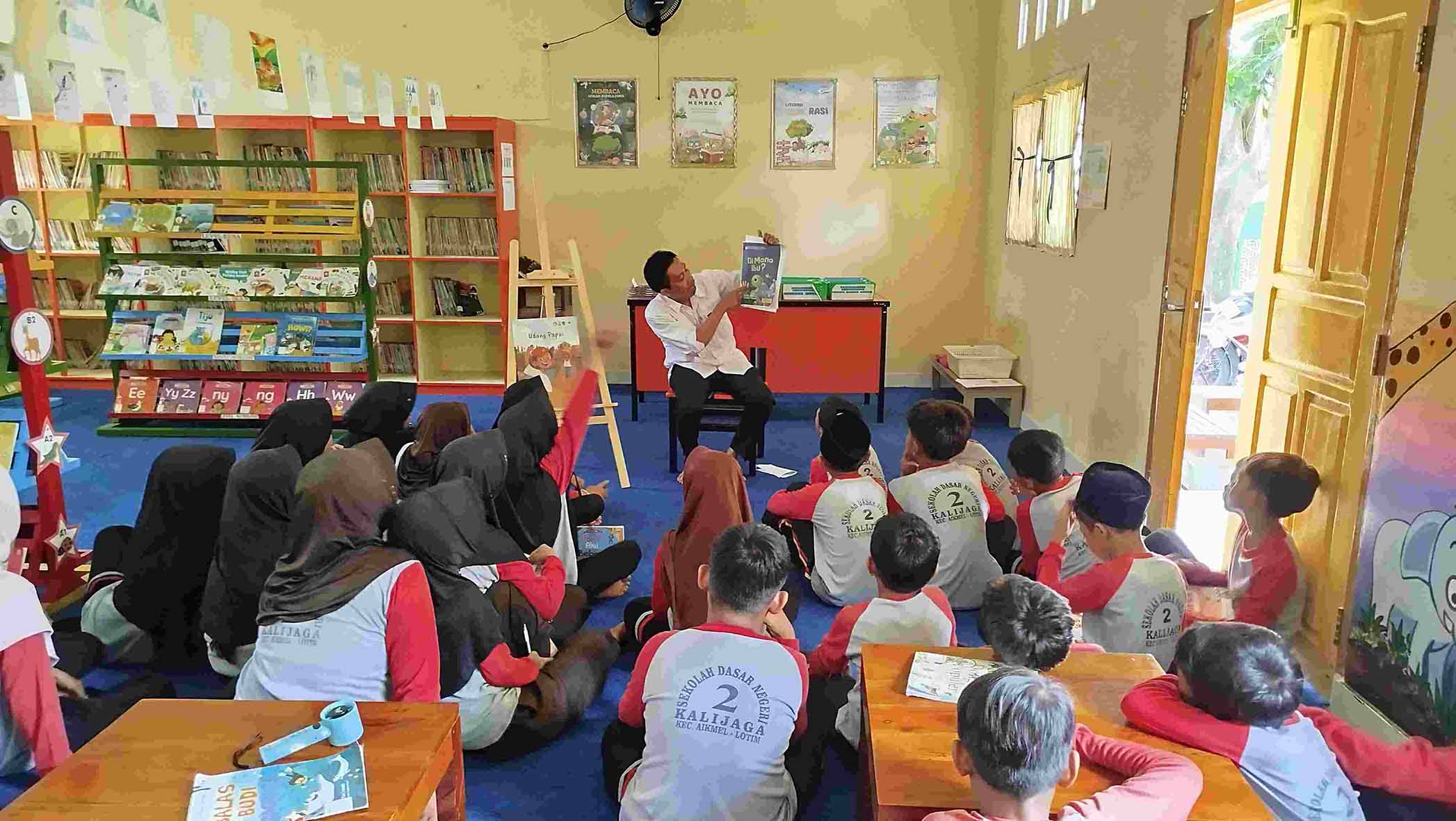
However, this isn’t enough to make a library child-friendly. The most important aspect of a children’s library, after meeting physical needs, is the inclusion of reading activities. The books provided in the library must be used by children to develop their reading habits.
One of the program recipient schools in East Lombok shared a story from the child-friendly school library. From the previously poorly managed space, the room was filled with the excited voices of children. Those who were initially hesitant to read because they weren’t yet fluent readers were encouraged to choose books they liked. Of course, they were inspired by the cover images.
Librarians and resource teachers from SDN 2 Kalijaga saw and felt positive changes in their students. At first, the children simply looked at the pictures. Later, they began reading books and trying to understand the stories. Most importantly, they were very enthusiastic about having their homeroom teacher read to them. Even during recess, they would come in with books and ask to be read to, saying, “Please read this book for me, Teacher,” while holding out their chosen book.
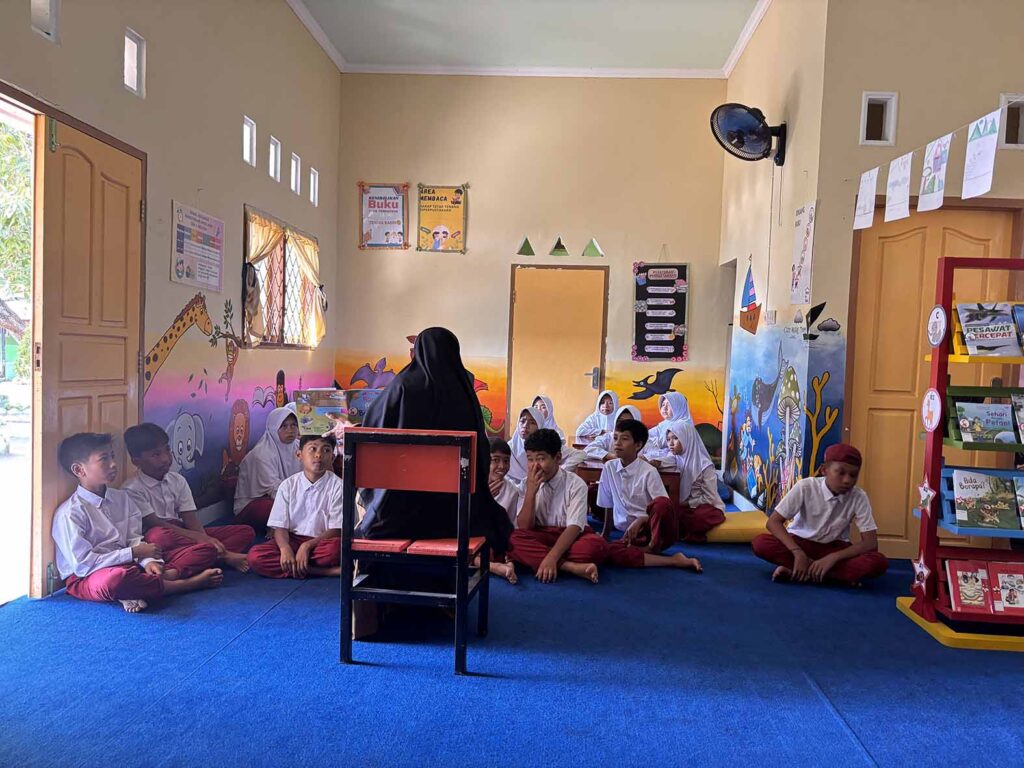
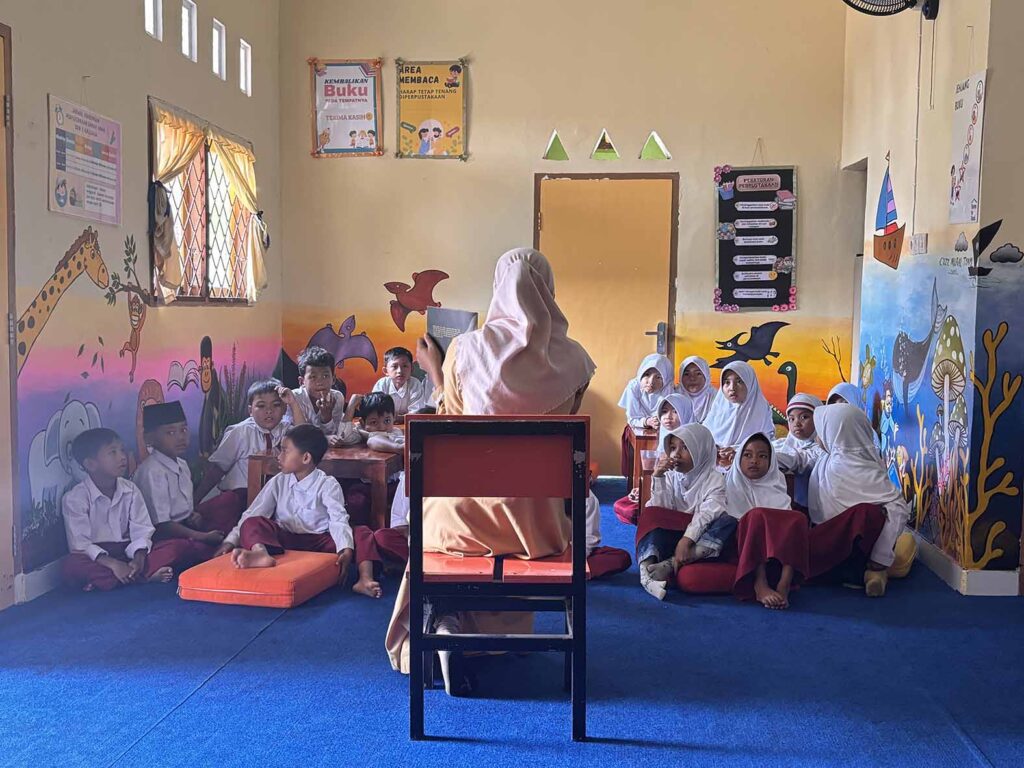
Furthermore, changes in students’ attitudes and responsibilities were also evident. Children brought books and returned them to the library. Teachers and librarians paid close attention to the library routines that children needed to become accustomed to. Since the child-friendly school library was established, the children’s sense of independence and responsibility for books has grown, a feeling both teachers and librarians have felt.
The most noticeable change is that the children enter the library every day. They immediately head to the colorful shelves with animal stickers indicating the level of the book. They choose and read books comfortably in the child-friendly library space.
In the library, the homeroom teacher reads stories to students, accompanies them in their reading, and helps them find books appropriate to their reading ability. Children enjoy being in the library, accompanied by teachers who are attentive to their needs.
Six months after the library officially opened, the school has experienced some benefits. Not only is the library beneficial for students, but it also has a positive impact on teachers. Teachers who initially only accompanied students in the library are now engaging in reading activities with students more effectively, not only reading but also encouraging students to express their opinions and to comprehend the reading, guided by observational, connection, and prediction questions.
From a dysfunctional room lacking children’s storybooks, the library has transformed into a child-friendly space that has impacted the school environment. This story is just one of hundreds of other good stories we often find when visiting partner schools, and it is a real effort to increase literacy and build a love of reading among Indonesian children. (Petricia Andini)