


Floods swallowing the road to school. Dry seasons stretching on longer than they used to. Temperatures that feel different from one year to the next. For many Indonesian children, this is no longer a topic in a textbook — it is something they are living through themselves.
The right book can change how children see, understand, and one day face these shifts — and can mark the first step from reading towards real action.
Through its PISA 2029 Climate Literacy Framework, the OECD places climate literacy among the core competencies children need — not as a nice extra, but as part of what it means to be ready for the world. Children with strong climate literacy do more than read about the environment. They learn to think critically, care about what is around them, and take real steps, starting young.
As an organisation dedicated to children’s literacy, Yayasan Literasi Anak Indonesia (YLAI) developed the Kenali Perubahan Iklim (“Knowin the Climate Change”) series to meet this challenge. The series brings together 32 non-fiction titles grounded in local context from seven provinces: West Java, East Java, West Nusa Tenggara and East Nusa Tenggara, through to Maluku, Papua and North Kalimantan.
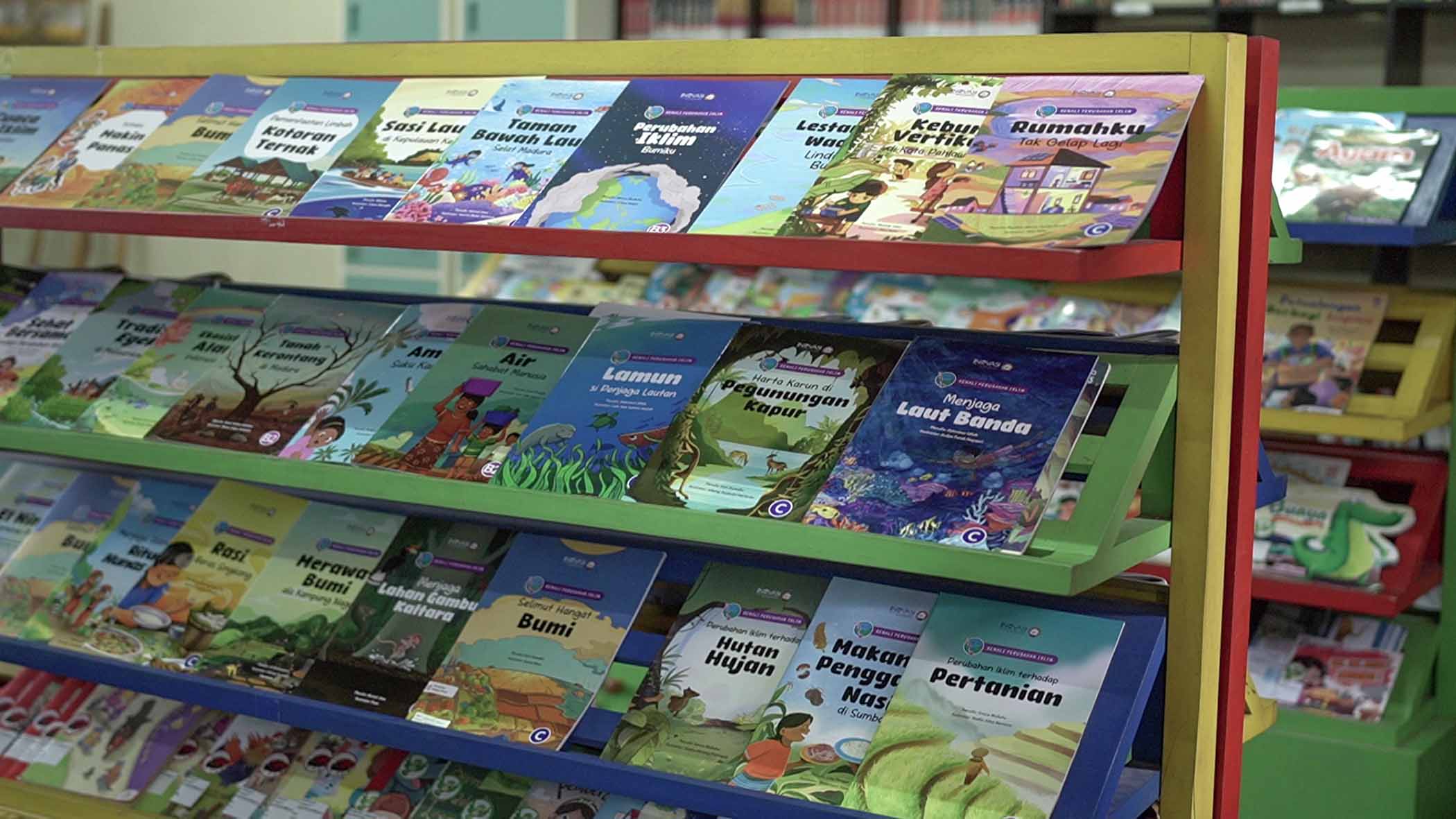
These books explore climate and environmental issues through the lens of local wisdom, from community traditions for coping with a changing climate to efforts to protect nature. Eight major themes run through the series, spanning threats to ecosystems and wildlife, food security, renewable energy, and health amid increasingly unpredictable weather. Menjaga Alam dengan Ritual Nunas Nede (“Protecting Nature with Nunas Nede Ritual”)tells the story of Kesik Village in West Nusa Tenggara, where a local ritual has helped the community withstand drought. Rumahku Tak Gelap Lagi (“My Home Isn’t Dark Anymore”) follows residents of East Nusa Tenggara turning to solar power to overcome rolling blackouts. Kotaku Makin Panas (“My City Getting Hotter”) looks at how Bandung, once known for its cool climate, has grown steadily warmer as the climate changes. And Amai Suku Kanume (“Amai of Kanume Tribe”) traces how the Kanume people of Merauke draw on ancestral knowledge to keep nature in balance.
Written for Phase B and C readers (Grade 3 to 6), the series is levelled from B2 to B3 through to C, with language growing more complex as readers advance. Every title is built on the Budaya Tangguh Iklim (“Climate-Resilient Culture”) framework and its four competencies of climate change education: understanding impact, recognising causes, learning to adapt, and taking steps towards mitigation. The arc moves from knowledge to concern, and from concern to real action.
On credibility, there is little room for doubt. Every book in the series has passed the Non-Text Book Suitability Assessment run by the Book Centre at Indonesia’s Ministry of Primary and Secondary Education (Pusat Perbukuan – Kemendikdasmen). Content is grounded in scientific fact and data, drawing on national and international journals, and was developed with direct input from a climatologist at BMKG, Indonesia’s meteorological agency, and a data visualisation specialist from Katadata.
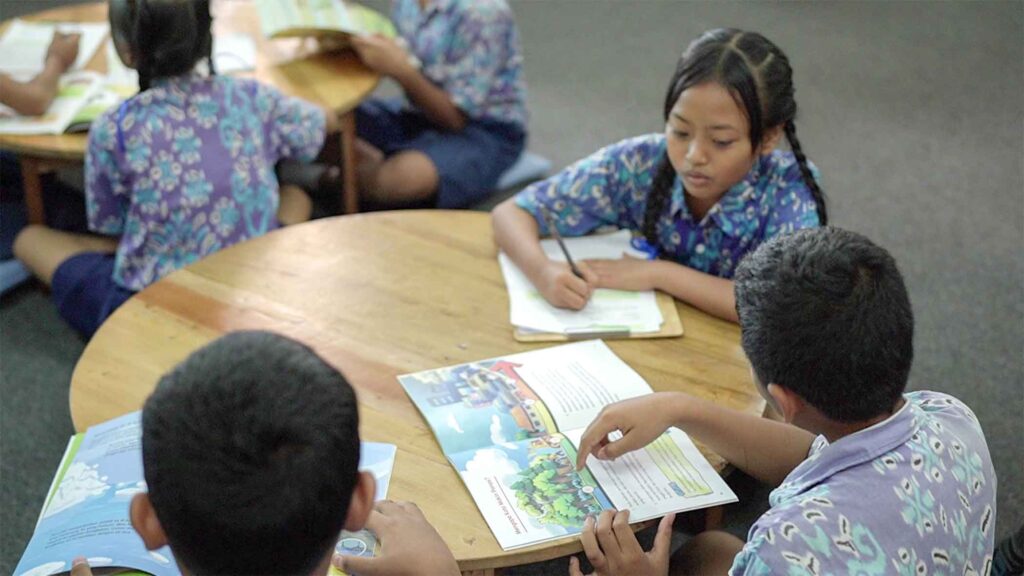
What sets this series apart is the space it gives children to genuinely enjoy reading, rather than simply take in information. Every title pairs fact-rich text with age-appropriate language and engaging illustrations. Infographics, maps, data charts, and process diagrams run throughout in full colour, helping children grasp ideas that are often hard to picture through text alone.
Not every parent feels ready to answer a child’s questions about weather that seems to be turning stranger by the year. The Kenali Perubahan Iklim series helps fill that gap, offering explanations shaped around how children think and grounded in their everyday experience. From there, home can become the first place a child learns that climate change is not something to face alone. The book of this series can open a warm conversation between parent and child.
For educators, the real challenge is rarely a lack of interest in teaching climate issues; it is finding the time and ready-made materials within an already packed curriculum. The Kenali Perubahan Iklim series answers that need with 32 teaching modules and four interdisciplinary, project-based learning kits. All materials were developed by a team of educators from seven provinces, supported by the Curriculum and Learning Centre (Pusat Kurikulum dan Pembelajaran) at Kemendikdasmen, and aligned with the Climate Change Education Guidelines and the Deep Learning approach. Teachers no longer need to build climate materials from scratch, while children move beyond memorising facts, learning instead to connect concepts, reflect on them critically, and apply them in real life.
A generation resilient enough to face climate change does not appear on its own. It needs to be equipped early, with the right book, in the right hands, books that help children not just understand what is happening to the planet, but believe they have a part to play in protecting it.
If you would like to introduce your child to climate issues through engaging reading, or you are looking for ready-to-use climate teaching materials for the classroom, explore the full Kenali Perubahan Iklim catalogue at s.literasi.org/KatalogBuku. (Grace Mailuhu)