


The balanced reading program in three regencies on Sumba Island—West Sumba, Central Sumba, and East Sumba—is a new hope for improving children’s literacy from an early age. The Indonesian Children’s Literacy Foundation (YLAI) and the local government are collaborating to train teachers, mentor students, and strengthen the reading culture in schools. Through a phonics approach and parental involvement, early grade children are increasingly helped to recognize letters and sounds, despite geographical challenges and limited resources. This shared commitment is expected to create a generation of intelligent readers who are ready to face the future.
Reading is the key to unlocking the world of knowledge. F rom reading, children can learn many things that will help them in the future. But before they can learn from books, they must first learn to read. On Sumba Island, particularly in three districts—West Sumba, Central Sumba, and East Sumba—literacy remains a major challenge.
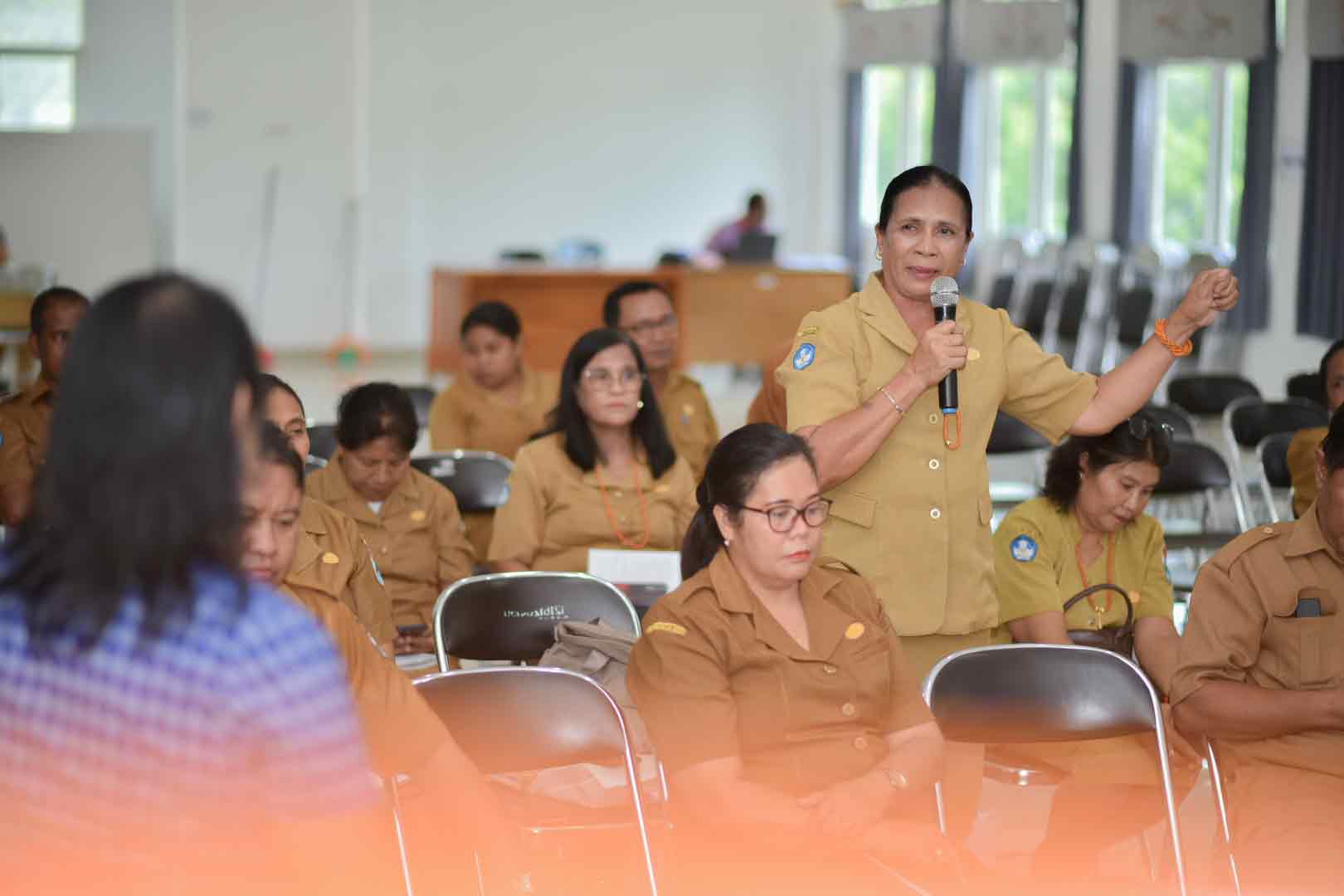
Many teachers there do not meet teaching standards, the distribution of civil servant teachers is uneven, and school principals still need support in leading and supervising learning. Furthermore, difficult geographical conditions, especially during the rainy season, make it difficult for children and teachers to get to school. Many early-grade children have never attended preschool, so they need extra time to learn letters and sounds.
Based on the experience of YLAI’s partner schools in West Sumba, first-grade children enter school with almost no familiarity with letters and sounds. Teachers still use general teaching methods that require them to follow the curriculum, making it difficult to allocate attention to assisting children individually.
However, teachers have begun implementing a simple and participatory balanced reading approach. Using phonics packages, they gradually introduce children to letters and sounds. For children who are still struggling, teachers are willing to spend time after school to provide more intensive support. They even visit homes to discuss with parents so that children can learn at home.
To implement this balanced reading program, YLAI collaborated with local governments in three Sumba regencies. They jointly drafted a Memorandum of Understanding (MoU) and a Partnership Agreement (PKS) so that all parties could contribute according to their respective roles. Local governments, from the Education Office to the legal and cooperation departments, are committed to supporting this program by providing permits, data, policies, budgets, and assistance during implementation. They are also ready to conduct monitoring and evaluation with YLAI to ensure the program runs smoothly and achieves optimal results.
The signing of the MoU and PKS marks a significant milestone, marking the Sumba regional government’s commitment to supporting the balanced reading program. This program is expected to improve the reading skills of children in grades 1-3 and help them achieve better academic performance. Hopefully, this approach can also be expanded to other underserved schools. With this strong partnership, we hope Sumba will be known not only for its natural beauty but also as the birthplace of a generation of intelligent and enthusiastic readers. (Mikael Lela S. Leuape & YLAI team)